
we don’t get paid until you do
call 918-528-0222
What Is Comparative Negligence and How Does It Affect My Oklahoma Case?
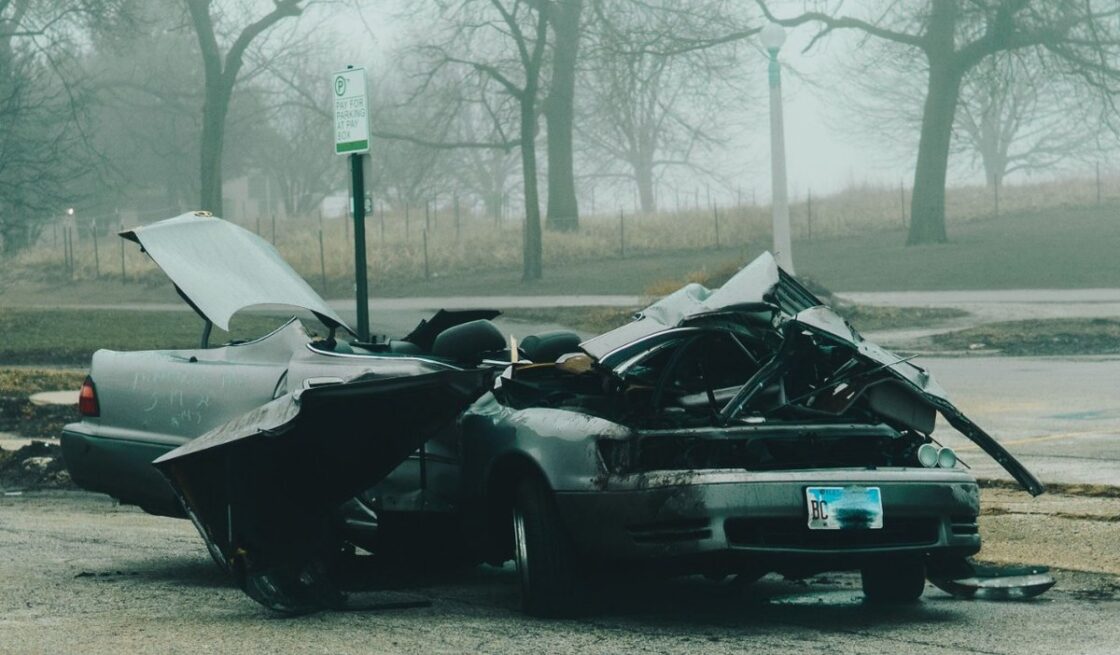
If you were hurt in Oklahoma and the insurance company says you were partly to blame, comparative negligence is the rule that decides what happens next. Oklahoma lets you recover damages as long as your share of the fault isn’t greater than the other side’s. Your award is then reduced by your percentage of fault.
Small differences in fault percentages can mean thousands of dollars. Whether you were 50% or 51% at fault, how many parties share the blame, and who has insurance can all decide what you actually collect.
How Comparative Negligence Works in Oklahoma
Negligence means carelessness that causes harm. Comparative negligence is how the law handles cases where more than one person was careless, including the person who got hurt.
States handle this in three basic ways.
- Pure comparative negligence. You can recover something even if you were mostly at fault. At 90% fault, you’d still get 10% of your damages.
- Modified comparative negligence. You can recover only if your fault stays under a set line. Past that line, you get nothing.
- Contributory negligence. In the few places that still use it, any fault at all on your part can bar recovery.
Oklahoma uses a modified system. Under 23 O.S. § 13, your own negligence doesn’t bar recovery “unless any negligence of the person so injured… is of greater degree than any negligence of the person… causing such damage.” Under 23 O.S. § 14, whatever you do recover is “diminished in proportion to” your own negligence.
Here’s what that looks like on a $100,000 claim.
| Your share of fault | Other side’s share | What you recover |
| 0% | 100% | $100,000 |
| 20% | 80% | $80,000 |
| 40% | 60% | $60,000 |
| 50% | 50% | $50,000 |
| 51% | 49% | $0 |
Because the rule only bars you when your fault is greater than the other side’s, an even split still lets you recover half. One percentage point past that, and the claim is worth nothing at trial.
Section 13 covers negligence claims for personal injury, wrongful death, and property damage. It works alongside the rest of Oklahoma’s car accident laws in wreck cases, and it applies the same way to truck accidents, slip and falls, and most other injury claims.
When More Than One Person Is at Fault
A lot of crashes involve more than two people. A chain-reaction wreck on the highway is one example. Two drivers who both made mistakes at an intersection is another. Oklahoma’s rule handles these cases in two steps.
Step one compares your fault to everyone else’s combined
Section 13 also bars recovery only if your negligence is greater than “the combined negligence of any persons, firms or corporations causing such damage.” So if you were 30% at fault and two other drivers were 40% and 30%, you’re compared against their combined 70%, not against each one separately. You can still recover.
Step two splits the bill
For claims that arose on or after November 1, 2011, each defendant pays only its own share. Under 23 O.S. § 15, liability is “several only,” and each wrongdoer is “liable only for the amount of damages allocated to that tortfeasor.”
In practice, that can leave a gap. Say a jury finds $200,000 in damages and splits fault this way.
| Party | Fault | Owes you |
| You | 10% | Nothing (your share comes off the top) |
| Driver A | 60% | $120,000 |
| Driver B | 30% | $60,000 |
If Driver B has no insurance and no money, Driver A doesn’t have to cover B’s $60,000. So we look for every party and every policy that could pay. Your own uninsured motorist coverage may help fill the gap when the at-fault driver has no insurance, and the same split applies when multiple vehicles cause a pile-up.
Who Decides Your Percentage of Fault?
If your case goes to a jury trial, the jury decides. Before that, the percentages are just arguments. The adjuster’s number, the police report, and the other driver’s version of events all carry weight in negotiation, but none of them is binding.
Insurance companies know how much a few points of fault are worth. On a $300,000 claim, moving you from 0% to 20% saves them $60,000. Moving you past 50% saves them everything. That’s why the first conversation with an adjuster often includes questions like how fast you were going, whether you saw the other car, and what you were doing right before the crash. It’s also why you should think twice before giving a recorded statement to the adjuster.
Common ways insurers try to shift fault in Oklahoma
- Speed and distraction. Phone records, vehicle data, and witness statements get pulled to argue you could have avoided the crash.
- Motorcycles and bikes. Lane position, speed, and visibility come up constantly.
- Open and obvious hazards. In slip and fall cases, the property owner will argue you should have seen the danger and walked around it.
- Drivers who never made contact. A driver who caused the wreck without touching anyone can still share the fault. Our attorneys won Fargo v. Hays-Kuehn, 2015 OK 56, where the Oklahoma Supreme Court held that a driver not directly involved in a collision could be held responsible for the death of another motorist. That can add another responsible party, and another insurance policy, to your side of the case.
How to Protect Yourself From an Unfair Fault Split
Evidence about fault is easiest to collect right after the crash.
- Don’t guess about fault at the scene. Saying “I’m sorry” or “I didn’t see them” can end up in a police report or an adjuster’s notes as an admission.
- Photograph everything. Vehicle positions, skid marks, traffic signals, road conditions, and anything that blocked your view.
- Get witness information. An independent witness is often the strongest answer to the other side’s version of events.
- Get the crash report and check it. If it has errors, a lawyer can address them early.
- Ask nearby businesses about cameras. Footage may be recorded over quickly.
- Don’t accept the insurer’s percentage. Insurers can and do change their numbers when they’re challenged with evidence.
If an insurer is already blaming you, our guide to what happens when you’re partially at fault for an accident walks through how to push back.
Common Questions
Is Oklahoma a comparative negligence state?
Yes. Oklahoma follows modified comparative negligence. You can recover if your fault is not greater than the other side’s, and your award is reduced by your percentage.
Does comparative negligence affect a settlement, or only a trial?
Both. Juries assign percentages at trial, but insurers estimate those same percentages when they make settlement offers. The stronger your evidence on fault, the less room they have to discount your claim.
Does the at-fault driver’s insurance decide my percentage?
No. The adjuster’s number is a negotiating position. It only becomes final through a verdict or an agreement you sign. A low offer based on shared fault is often a lowball settlement offer you can challenge.
Talk to a 2|22 Attorney About Shared Fault
2|22 Injury Lawyers is a family-run firm with offices in Tulsa, Oklahoma City, and Grove. Our attorneys, Tye Smith, Sheldon Smith, Bailey Smith Londagin, and Christopher Stevens, have recovered more than $80 million in verdicts and settlements for injured Oklahomans.
If an insurer is blaming you for your own injuries, our Tulsa personal injury lawyers will review the evidence and tell you whether their fault split holds up.
The consultation is free, and we don’t get paid until you do. Call or send us a message.

Oklahoma City Office
2|22 Injury Lawyers™, PLLC
7301 Broadway Ext Suite 222
Oklahoma City, OK 73116
Request a Free Consultation
We Don’t Get Paid Until You Do
Fields Marked With An * Are Required

Tulsa Office
2|22 Injury Lawyers™, PLLC
1217 E 33rd St.
Tulsa, OK 74105
*Please send all mail correspondence to this location
visit us
Oklahoma City Office
2|22 Injury Lawyers™, PLLC
7301 Broadway Ext Suite 222
Oklahoma City, OK 73116
visit us
Tulsa Address
2|22 Injury Lawyers™, PLLC
1217 E 33rd St.,
Tulsa, OK 74105
*Please send all mail correspondence to this location
call us
toll free 918-528-0222
© Copyright 2026 2|22 Injury Lawyers™. All rights reserved.