
we don’t get paid until you do
call 918-528-0222
Can I Sue If Ice or Snow Caused Me to Slip and Fall at a Business?
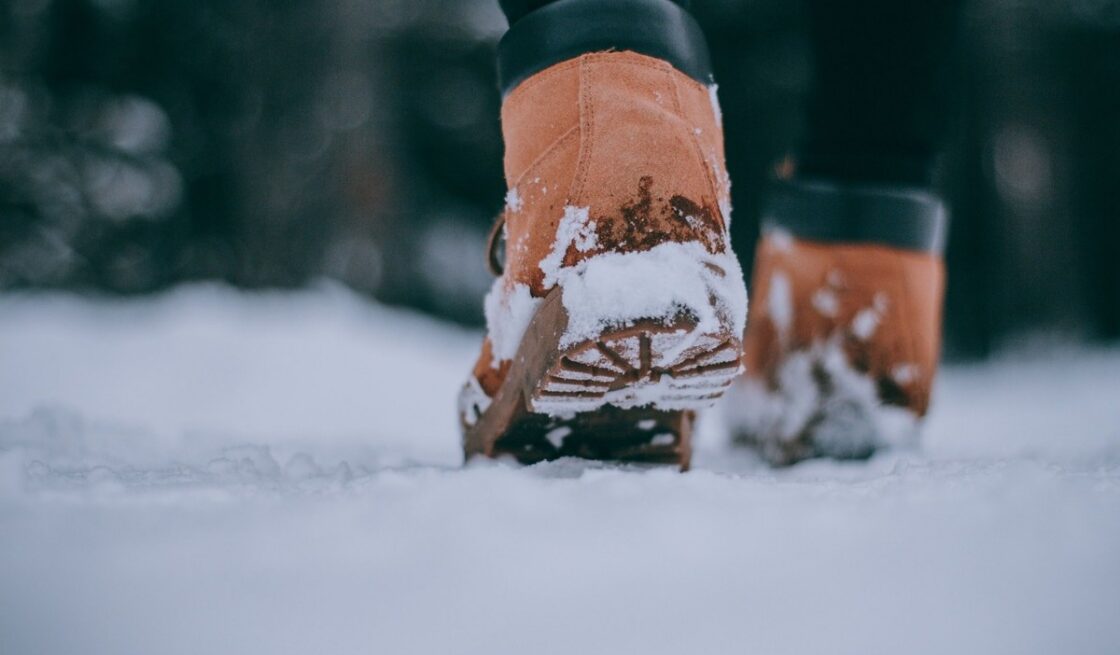
If you slipped on ice or snow at a store, restaurant, gas station, or other business in Oklahoma, you may be able to sue. But Oklahoma law makes these cases harder than most slip and falls.
As a general rule, a business isn’t responsible for ice and snow that builds up naturally from the weather. It can be responsible when it created the ice itself or made a natural hazard worse. Most of these cases turn on where the ice came from.
Oklahoma’s Natural Accumulation Rule
Businesses owe customers reasonable care to keep their property safe. That’s the basis of every premises liability claim. Winter weather is treated differently, though.
Oklahoma courts have long held that injuries from natural weather conditions don’t increase a property owner’s liability. The idea is that everyone in Oklahoma knows ice storms happen, and a sheet of ice from freezing rain is a danger visitors can see for themselves. That’s the natural accumulation rule, and it’s the first defense a business will raise.
- In Krokowski v. Henderson National Corp., 1996 OK 57, a case about a landlord, the court said the rule doesn’t mean “an invitor will never be liable” for a fall on naturally occurring ice or snow, and that “if a landlord increases the natural hazard, liability may be imposed.” The tenant there said a drain pipe the landlord installed caused water to pool and freeze, and the court reversed the ruling that had thrown the case out.
- In Wood v. Mercedes-Benz of Oklahoma City (Okla. 2014), a sprinkler ran overnight and iced over the dealership’s grounds. The court said it has “rejected the open and obvious doctrine for a hazardous accumulation of ice, caused or enhanced by a landowner,” and held that, on those particular facts, the business owed a duty to take precautions for workers it knew had to cross that ice. The court also noted it wasn’t doing away with the open and obvious defense in every case.
What matters is whether the business caused the ice or made it worse. Most cases about businesses will lean on these same principles.
When a Business Can Be Liable for Ice or Snow
Here’s where businesses tend to get into trouble. Each example points back to something the business did or controlled, not just the weather. Not all of them have been tested in an Oklahoma appeals court, so the strength of a claim depends on the facts.
- The business created the ice. Sprinklers left running in freezing weather, a leaking gutter, a dripping air conditioner, or water from a car wash or hose that froze on the walkway.
- The business made it worse. A downspout or drain that dumps water across a sidewalk, snow piled where it melts and refreezes across the entrance, or a parking lot graded so water collects in one spot.
- Snow removal made it worse. Plowing that leaves a packed, slick layer, or shoveling that leaves ridges and refrozen patches. Like the drain pipe in Krokowski, the argument is that the business increased the natural hazard.
- Workers had to cross it. Under Wood, the court weighed that the business knew workers had to cross the ice to do their jobs.
- Ice tracked inside. Once snow and ice get carried into a store and melt into puddles on tile, the hazard is no longer just the weather outside, and the claim may be treated more like any other injury in a store caused by a wet floor.
- A broken promise to clear it. Some businesses hire snow removal contractors or have written policies on salting. If they ignored their own plan, that can help show they didn’t use reasonable care.
To win, you still have to prove the business was negligent, which means showing it knew or should have known about the hazard and didn’t fix it or warn you in time.
What to Do After You Fall on Ice at a Business
The ice is usually gone by the next afternoon, and so is your best evidence of where it came from. If you’re able, do these things right away or ask someone with you to do them.
- Photograph the ice and its source. Don’t stop at the spot where you fell. Get the gutter, downspout, sprinkler head, drain, or snow pile that fed it, and anything that shows the walkway wasn’t salted.
- Note the weather. Write down when it last rained, sleeted, or snowed. If the sky had been clear for days and there was still ice, that suggests the water came from somewhere on the property.
- Report the fall to a manager. Ask for a copy of the incident report, or at least the manager’s name.
- Get witness names and numbers. Other customers and employees may know the spot ices over every winter.
- Ask about cameras. Security footage is often recorded over within days or weeks. A lawyer can send a letter demanding the business preserve it.
- See a doctor. Falls on ice can cause broken wrists, hips, and ankles, head injuries, and back injuries. Some of those don’t show up right away.
- Keep your shoes. The business may argue your footwear caused the fall.
While the claim is pending, your own health insurance or the business’s medical payments coverage may help with medical bills after a slip and fall.
Other Oklahoma Rules That Affect an Ice or Snow Claim
The business will say you should have been more careful
Expect questions about your shoes, whether you were looking at your phone, and why you didn’t use another entrance. Under Oklahoma’s comparative negligence law (23 O.S. § 13), you can still recover if you were partly at fault, as long as your share isn’t greater than the business’s. Your award is reduced by your percentage.
Falls on government property are much harder
Oklahoma’s Governmental Tort Claims Act specifically protects cities, counties, and the state from claims over “snow or ice conditions or temporary or natural conditions on any public way or other public place due to weather conditions” (51 O.S. § 155). The exception is when the government affirmatively caused the condition through its own negligence. Even then, you must give written notice within one year (51 O.S. § 156). That covers places like a city sidewalk, a county courthouse, or a public school.
Falls at work or at home
If you fell on ice at your job, workers’ compensation is usually your main remedy against your employer, though a separate business that caused the hazard may still be responsible. If it happened at your apartment complex, the landlord rules from Krokowski apply.
Deadlines and damage limits
Most Oklahoma injury lawsuits must be filed within two years (12 O.S. § 95). For injuries on or after September 1, 2025, pain and suffering damages are capped at $500,000 in most cases, with exceptions for permanent and severe injuries (23 O.S. § 61.3). Medical bills and lost income aren’t capped.
Common Questions
How much is a slip and fall on ice worth?
It depends on the injury, the treatment, the time you missed from work, and how clearly the business caused or worsened the ice. The same factors drive the average premises liability settlement in Oklahoma.
Can a delivery driver sue for slipping on ice at a customer’s business?
Possibly. A delivery driver hurt on the job usually has a workers’ compensation claim through their employer. If the business they were delivering to created or worsened the ice, the driver may also have a separate claim against that business. The facts in Wood, a catering worker who had to cross a dealership’s iced-over lot, are similar.
The ice was easy to see. Does that end my case?
Not always. In Wood, the worker knew about the ice and walked across it anyway, and the court still found the business owed a duty because its sprinkler created the ice. The court was clear that its ruling turned on those facts, so how visible the ice was will still matter.
Do I need a lawyer for an ice or snow fall?
Ice cases are hard to win in Oklahoma, and the evidence disappears fast. A lawyer can demand that the business keep its video and maintenance records, pull weather data for the days before your fall, and bring in someone who can trace where the water came from.
Talk to a 2|22 Premises Liability Attorney
2|22 Injury Lawyers is a family-run firm with offices in Tulsa, Oklahoma City, and Grove. Our attorneys, Tye Smith, Sheldon Smith, Bailey Smith Londagin, and Christopher Stevens, have recovered more than $80 million in verdicts and settlements for injured Oklahomans.
If you fell on ice or snow at a business, our Tulsa slip and fall lawyers can look at where the ice came from and tell you whether you have a case.
The consultation is free, and we don’t get paid until you do. Call or send us a message.

Oklahoma City Office
2|22 Injury Lawyers™, PLLC
7301 Broadway Ext Suite 222
Oklahoma City, OK 73116
Request a Free Consultation
We Don’t Get Paid Until You Do
Fields Marked With An * Are Required

Tulsa Office
2|22 Injury Lawyers™, PLLC
1217 E 33rd St.
Tulsa, OK 74105
*Please send all mail correspondence to this location
visit us
Oklahoma City Office
2|22 Injury Lawyers™, PLLC
7301 Broadway Ext Suite 222
Oklahoma City, OK 73116
visit us
Tulsa Address
2|22 Injury Lawyers™, PLLC
1217 E 33rd St.,
Tulsa, OK 74105
*Please send all mail correspondence to this location
call us
toll free 918-528-0222
© Copyright 2026 2|22 Injury Lawyers™. All rights reserved.