
we don’t get paid until you do
call 918-528-0222
How Much Compensation Can I Get for a Herniated Disc Injury in Tulsa?
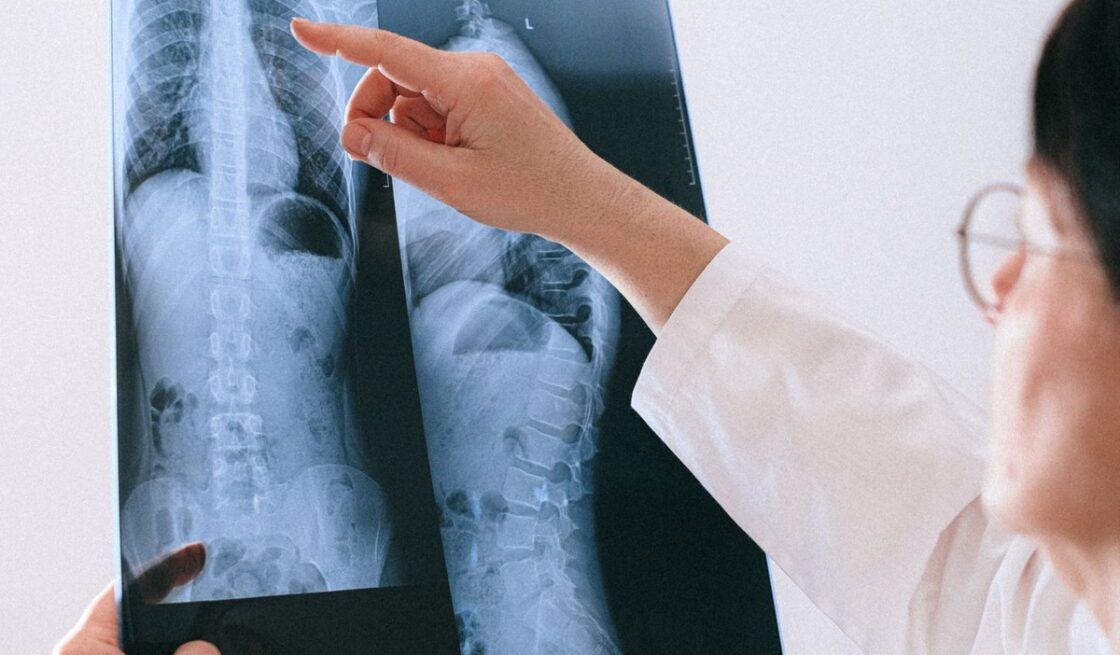
If you have a herniated disc from a car wreck, truck crash, or fall in Tulsa that someone else caused, you can recover compensation for your medical bills, lost income, and the pain the injury causes. How much depends less on the diagnosis itself and more on what the injury has done to your life and how well it’s documented.
There’s no reliable “average” herniated disc settlement for Tulsa, and you should be skeptical of any website that gives you one. Two people with the same MRI can have claims worth very different amounts. One recovers with a few months of physical therapy. The other needs surgery, misses a year of work, and lives with nerve pain for good.
What Decides the Value of a Herniated Disc Claim?
A herniated disc happens when the soft center of a spinal disc pushes through its outer layer. Some people barely feel it. Others feel it every time they sit, stand, or turn their head, especially when the disc presses on a nerve and sends pain, numbness, or weakness down an arm or leg.
Value follows how the injury plays out. These factors matter most.
- Objective proof. An MRI showing the herniation, plus nerve testing or a doctor documenting weakness or lost reflexes, carries far more weight than pain complaints alone.
- Nerve involvement. Pain that travels into the arm (from the neck) or down the leg (sciatica, from the lower back) usually means a more serious injury and a more valuable claim.
- Treatment. Physical therapy, injections, and surgery each move the value up. More on that below.
- Permanence. A doctor’s opinion that you’ll have lasting limits, or will likely need surgery later, is often worth more than the treatment you’ve already had.
- Work. Missed time, light duty, or a job you can no longer do all count toward your lost wages and lost earning capacity.
- Daily life. Sleep, driving, picking up your kids, yard work. This is the heart of pain and suffering, and it can be a large part of the claim.
- Fault and insurance. Who caused the crash, whether you share any blame, and how much coverage is available.
Whiplash and other spine injuries are valued the same way, and the ranges are different for each. We break those down in our guide to back and neck injury settlements in Oklahoma.
Herniated Disc Settlements With and Without Surgery
Most herniated discs don’t need surgery. According to HealthLink BC, 62 out of 100 people with sciatica from a herniated lower back disc had little or no pain within three months of non-surgical care, and 69 out of 100 within two years (HealthLink BC).
That’s good news for your health, and it’s also why insurers start low on cases without surgery. A claim built on physical therapy and a few months of pain is real, but it’s usually valued well below one involving surgery or permanent nerve damage.
Without surgery
Care often includes physical therapy, prescription medication, chiropractic care, and epidural steroid injections. Injections matter because they show a doctor thought the pain was serious enough for a procedure. Gaps in treatment, on the other hand, are one of the first things an adjuster will point to.
With surgery
When conservative care fails, the next step is often surgery to remove part of the disc or fuse the vertebrae. Becker’s Spine Review reports these price ranges without naming its data source, with the laminectomy and fusion figures based on patients paying without insurance.
| Procedure | Reported cost range |
| Discectomy (removing part of the disc) | $15,000 to $35,000 |
| Laminectomy (relieving pressure on the nerves) | $50,000 to $90,000 |
| Spinal fusion | $80,000 to $150,000 |
Those figures cover the surgery itself. They don’t include the MRIs, specialist visits, rehab, time off work, or the chance you’ll need more surgery down the road. A claim involving surgery should account for all of it.
More than one herniated disc
Injuries at two or three levels of the spine usually mean more symptoms, more treatment, and a higher value. They also give the insurer more room to argue that some of the damage was already there, which is why the medical records need to tie each level to the crash.
How Insurance Companies Fight Herniated Disc Claims
Herniated disc claims draw a lot of pushback, because the insurer can almost always find something to argue about.
“It was already there”
This is the most common defense, and there’s a reason it works on some juries. Spine changes are extremely common in people with no symptoms at all. A review of imaging studies covering 3,110 people without back pain found disc degeneration in 37% of 20-year-olds and 96% of 80-year-olds, and disc protrusions in 29% of 20-year-olds and 43% of 80-year-olds (American Journal of Neuroradiology).
The answer isn’t to pretend your spine was perfect. It’s to show the change. If you were working, sleeping, and living without back or neck pain before the crash, and you weren’t afterward, that change is what you have to prove. Prior medical records, coworkers, and family can all help prove it.
“The crash was too minor”
Insurers love to point at a small repair bill. Our attorneys have taken that argument on, with results including a $750,000 jury verdict for a client with a herniated disc after a rear-end crash with minimal property damage (Glass v. Cross Country Freight) and a $1,000,000 settlement after a two-week bench trial for a client in a rear-end collision with no visible damage (Likowski v. Jim Norton Toyota).
Gaps in treatment and surveillance
If you wait weeks to see a doctor or stop going to therapy, the insurer will argue you weren’t really hurt or that something else caused the injury. On larger disc claims, insurers sometimes hire investigators to film claimants too, so live within the limits your doctor sets.
The early, low offer
Adjusters often make an offer before you know whether you’ll need injections or surgery. Once you accept, the claim is over. If the first number seems low, it helps to know how to respond to a lowball settlement offer before you answer.
Oklahoma Laws That Affect Your Herniated Disc Claim
Your medical bills are measured by what was paid
Under 12 O.S. § 3009.1, the medical expenses a jury sees are generally the amounts actually paid for your care, not the full amounts billed. If nothing has been paid, the Medicare rate can be used instead. The full billed amount can still come in if the provider doesn’t give the required statement in time.
So if a hospital billed $60,000 for your surgery and your health insurer paid $22,000, the $22,000 figure is usually what counts. That’s one reason the bills alone rarely tell you what a disc case is worth, and why the pain, limits, and lost income often matter more.
Pain and suffering is capped in most cases
For injuries on or after September 1, 2025, Oklahoma limits physical pain and suffering and other non-economic damages to $500,000 (23 O.S. § 61.3). The cap doesn’t apply to medical bills or lost income. It also doesn’t apply if the injury is permanent and severe, or if a judge and jury find by clear and convincing evidence that the at-fault party acted recklessly or with gross negligence, such as a drunk driver. Most herniated disc claims fall under the cap, but a disc injury that leaves you with permanent, severe limits may not.
Your share of fault reduces the award
If the insurer argues you were partly to blame, Oklahoma’s comparative negligence rule (23 O.S. § 13) reduces your recovery by your percentage of fault and bars it entirely if your fault is greater than the other side’s. You can still recover when you’re partially at fault for the accident, as long as your share stays at or below theirs.
You have two years to file
Most Oklahoma injury lawsuits must be filed within two years of the injury (12 O.S. § 95). Disc injuries sometimes get worse over months, so don’t let the deadline creep up while you wait to see how treatment goes. More in our guide to the Oklahoma personal injury statute of limitations.
Hurt at work?
If your disc injury happened on the job, workers’ compensation is usually your main remedy against your employer. But if someone else caused it, such as another driver on a work trip, you may have a separate injury claim against them.
Common Questions
How much is a herniated disc worth without surgery?
It depends on how long you treated, whether the disc is pressing on a nerve, how much work you missed, and whether a doctor says you’ll have lasting problems. Claims without surgery are usually valued lower, but a well-documented injury that changed your daily life can still be significant.
Do steroid injections increase a settlement?
They often do. Injections are a medical procedure, they’re documented in your records, and they show your doctor believed conservative care alone wasn’t enough. Only get the treatment your doctor recommends, though, not treatment meant to build a case.
How long does a herniated disc case take?
Most take longer than people expect, partly because it’s smart to wait until your doctors know whether you’ll need surgery. Settling before then can leave future treatment uncovered.
Talk to a Tulsa Injury Lawyer at 2|22
2|22 Injury Lawyers is a family-run firm with offices in Tulsa, Oklahoma City, and Grove. Our attorneys, Tye Smith, Sheldon Smith, Bailey Smith Londagin, and Christopher Stevens, have recovered more than $80 million in verdicts and settlements for injured Oklahomans.
If a crash or fall left you with a herniated disc, our Tulsa car accident lawyers can tell you what your claim is likely worth and what the insurer is likely to argue.
The consultation is free, and we don’t get paid until you do. Call or send us a message.

Oklahoma City Office
2|22 Injury Lawyers™, PLLC
7301 Broadway Ext Suite 222
Oklahoma City, OK 73116
Request a Free Consultation
We Don’t Get Paid Until You Do
Fields Marked With An * Are Required

Tulsa Office
2|22 Injury Lawyers™, PLLC
1217 E 33rd St.
Tulsa, OK 74105
*Please send all mail correspondence to this location
visit us
Oklahoma City Office
2|22 Injury Lawyers™, PLLC
7301 Broadway Ext Suite 222
Oklahoma City, OK 73116
visit us
Tulsa Address
2|22 Injury Lawyers™, PLLC
1217 E 33rd St.,
Tulsa, OK 74105
*Please send all mail correspondence to this location
call us
toll free 918-528-0222
© Copyright 2026 2|22 Injury Lawyers™. All rights reserved.