
we don’t get paid until you do
call 918-528-0222
Does Not Wearing a Life Jacket Hurt My Boating Injury Claim?
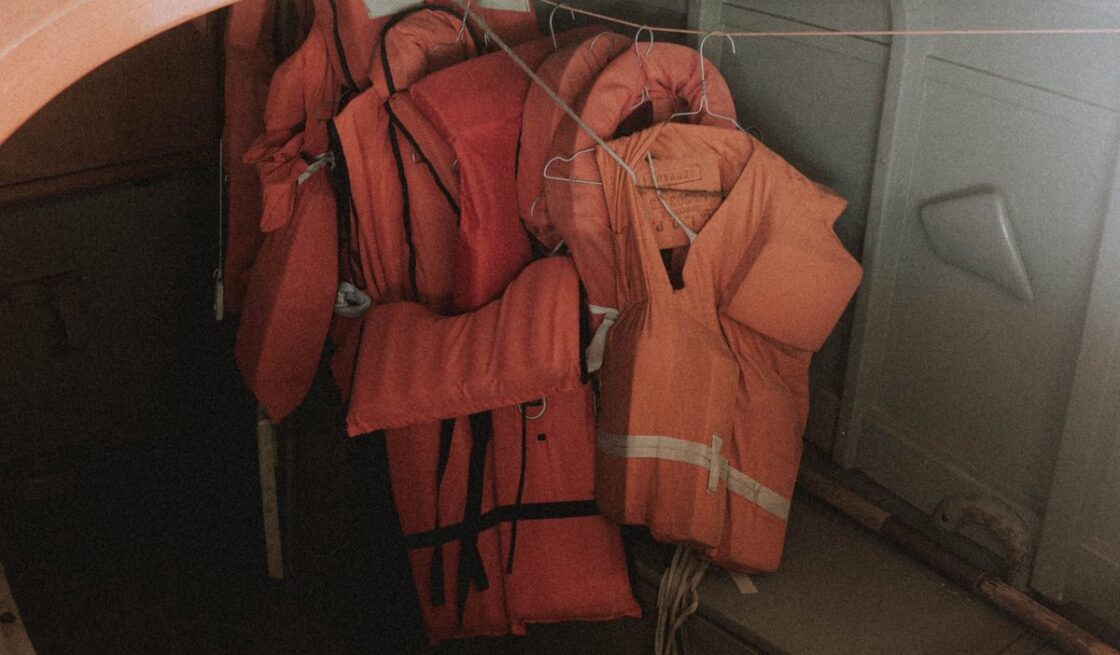
You were hurt in a boat crash you did not cause, and now the adjuster keeps circling back to one question: were you wearing a life jacket? It feels like a trap, and to some extent it is.
Here is the short answer. Not wearing a life jacket does not bar your claim, and for most adults on a boat it is not even against the law. It can still be used against you, so it is worth knowing exactly how that argument works and where it falls apart.
Is It Illegal for an Adult Not to Wear a Life Jacket in Oklahoma?
For most adults on a regular boat, no.
Oklahoma requires every vessel to carry a Coast Guard approved flotation device for each person on board, in good condition, properly sized, and readily accessible. Carrying is the requirement. Wearing is not, for most adults.
Wearing is required in specific situations:
- Passengers 12 and under, while underway on a vessel less than 26 feet long
- Anyone operating or riding on a personal watercraft
- Anyone being towed on water skis, a wakeboard, or a similar device
- Anyone on a sailboard, paddleboard, kayak, or similar craft under GRDA’s lake rules
So if you were an adult sitting in a pontoon boat when someone ran into you, you broke no law by not wearing one. That single point undercuts a lot of adjuster pressure.
Why Do Insurers Ask About It Anyway?
Because Oklahoma uses comparative negligence under 23 O.S. § 13. You can recover if your share of the fault was 50% or less, and your award is reduced by your percentage. Every point of fault the insurer can pin on you is money off the claim.
There is a useful contrast here. For car crashes, the legislature passed a specific statute, 47 O.S. § 12-420, directing that seat belt use or nonuse be submitted into evidence in civil suits, with an exception for plaintiffs under 16. Oklahoma has no equivalent statute for life jackets. The legislature addressed seat belts specifically and did not do the same for personal flotation devices.
That does not guarantee the subject stays out of your case. It does mean the defense is making an ordinary comparative fault argument rather than relying on a statute written for them.
When Does a Life Jacket Argument Actually Matter?
It comes down to causation. A life jacket prevents drowning. It does not prevent most other boating injuries.
Situations where it usually carries little weight:
- Propeller injuries
- Broken bones and crush injuries from collision impact
- Head injuries from being thrown against the boat
- Burns from a fire or fuel explosion
- Injuries where you were never in the water at all
Situations where it matters more:
- Drowning or near-drowning after going into the water
- Cases where a person stayed afloat long enough to be rescued but for the lack of a device
If a life jacket would not have changed your injuries, its absence should not reduce your recovery. That is a medical and engineering question, not an argument an adjuster gets to settle on a phone call.
What If a Child Was Not Wearing One?
Different situation, and the fault usually runs the other direction. Oklahoma requires passengers 12 and under to wear a device on a vessel under 26 feet while underway, and the rules place that duty on the operator. When a child is hurt and no device was worn, the operator’s failure is generally evidence against the operator, not against the child.
Children are also held to a different standard of care than adults in negligence cases.
What If You Were on a Jet Ski or Being Towed?
Then wearing one was required, and the defense will lean on it. Even so, a violation does not end your claim. It becomes one factor in the comparative fault analysis, and it still has to be connected to how you were actually injured.
Someone struck by a speeding boat while riding a jet ski was injured by the collision, not by the absence of a device. That distinction matters.
What Does the Data Say?
Drowning accounted for 76% of recreational boating deaths in 2024, and 87% of those who drowned were not wearing a life jacket, according to Coast Guard statistics. Alcohol was the leading known contributing factor in fatal incidents.
Those numbers are a strong reason to wear one. They are not a reason to accept blame for a crash someone else caused.
What Should You Do If the Adjuster Presses You on It?
- Do not give a recorded statement before getting advice
- Do not speculate about whether a device “would have helped”
- Do write down what you remember while it is fresh
- Do get the medical records that show the actual mechanism of injury
- Do let a lawyer handle further contact
Oklahoma is a one-party consent state under 13 O.S. § 176.4, so an adjuster can record a call without announcing it.
Most Oklahoma injury claims must be filed within two years under 12 O.S. § 95, and wrongful death claims run two years from the date of death.
Keep a Life Jacket Question From Shrinking Your Boating Injury Claim
Not wearing a life jacket is not a defense to someone else’s careless boating. For most adults it is not a violation at all, and even where it is, it only matters if it actually contributed to the harm you suffered. The insurer’s job is to blur that line. Your job is not to help.
2|22 Injury Lawyers has recovered more than $80 million for Oklahomans and knows how insurers build comparative fault arguments in lake cases. We work on contingency, so you pay nothing unless we recover for you.
Contact us for a free case review. You can also read about our boating accident claims, Grand Lake injury claims, and wrongful death claims.

Oklahoma City Office
2|22 Injury Lawyers™, PLLC
7301 Broadway Ext Suite 222
Oklahoma City, OK 73116
Request a Free Consultation
We Don’t Get Paid Until You Do
Fields Marked With An * Are Required

Tulsa Office
2|22 Injury Lawyers™, PLLC
1217 E 33rd St.
Tulsa, OK 74105
*Please send all mail correspondence to this location
visit us
Oklahoma City Office
2|22 Injury Lawyers™, PLLC
7301 Broadway Ext Suite 222
Oklahoma City, OK 73116
visit us
Tulsa Address
2|22 Injury Lawyers™, PLLC
1217 E 33rd St.,
Tulsa, OK 74105
*Please send all mail correspondence to this location
call us
toll free 918-528-0222
© Copyright 2026 2|22 Injury Lawyers™. All rights reserved.