
we don’t get paid until you do
call 918-528-0222
What Should I Do If the Insurance Company Is Spying on Me After My Claim?
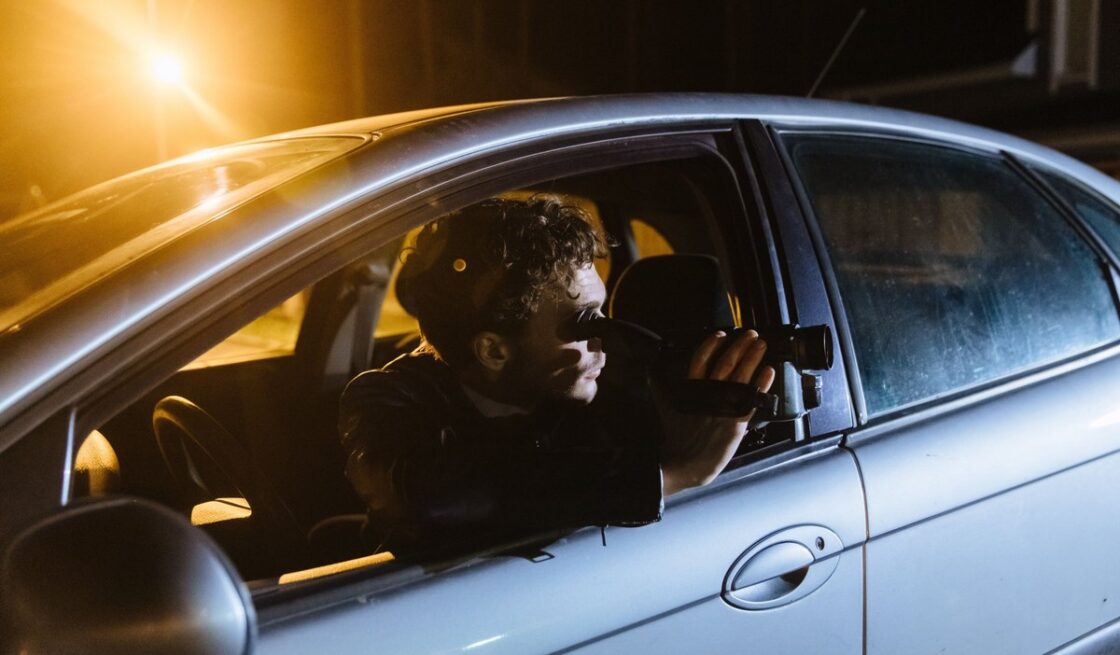
If you think an insurance company is watching you after an injury claim, you may be right. Insurers do hire investigators to follow and film people with injury claims, and in Oklahoma most of it is legal as long as they stay in public view.
Surveillance does the most damage when the video and your story don’t line up. So the short answer is to keep living the way your doctor told you to, describe your limits honestly, stay off social media, and never confront the person watching you. Write down what you saw and tell your lawyer.
Why Insurance Companies Watch Injured People
Surveillance costs the insurer money, so they don’t spend it on every claim. They spend it where they think a few minutes of video could knock a large number down. That usually means one or more of these is true about your case.
- The claim is big. A serious injury, a long recovery, or a commercial policy with high limits, like a semi truck or company vehicle.
- The injury doesn’t show up on a scan. Back and neck pain, concussions, and nerve damage are real, but they’re hard to see on an X-ray, and adjusters treat back and neck injury claims with extra suspicion.
- You’re claiming you can’t work. A lost wages claim invites the insurer to check whether you’re doing anything that looks like work.
- The crash looked minor. Insurers love to argue that a fender bender can’t cause real injury. Our attorneys have heard that argument for decades and have beaten it in court, including a $750,000 jury verdict for a client with a herniated disk after a rear-end crash with minimal property damage (Glass v. Cross Country Freight).
When surveillance usually happens
There’s no fixed schedule, but surveillance tends to cluster around the moments when the insurer is deciding how much your case is worth.
- Shortly after the claim is opened, to see what your life looks like early on
- Right before or after your deposition, when you’ve described your limits under oath
- Around an independent medical exam (IME) the insurer has scheduled for you
- In the months before mediation or trial
- Any time your social media suggests you’re more active than your medical records say
The second and third points matter most. Investigators like to film someone the same week they told a doctor or a court reporter they can’t lift a laundry basket.
What Can an Insurance Investigator Legally Do in Oklahoma?
The basic rule is that anything you do in public, or in plain view of the public, is fair game. Anything you do where you’d reasonably expect privacy is not. Oklahoma also requires anyone working as a private investigator for hire to be licensed through CLEET, the state’s Council on Law Enforcement Education and Training (CLEET licensing).
| Usually allowed | Not allowed |
| Filming you at the grocery store, the gas station, a ballgame, or church | Entering your house, garage, or fenced backyard without permission |
| Filming you in your front yard or driveway from the street | Secretly recording you anywhere you have a reasonable expectation of privacy, like through a bathroom or bedroom window (21 O.S. § 1171) |
| Following you in traffic at a distance | Following you so aggressively that you feel threatened or it creates a safety hazard |
| Viewing anything you post publicly online | Breaking into your accounts or reading your private messages |
| Talking to your neighbors or coworkers | Pretending to be police, or trespassing to get to them |
| An adjuster recording a phone call with you (13 O.S. § 176.4) | Recording a conversation they aren’t part of |
That last row surprises a lot of people. Oklahoma is a one-party consent state, so an adjuster can record a call with you without asking first, and anything you say in a recorded statement can come back later.
If you see someone on your property, or someone following you in a way that scares you, call the police first and your lawyer second. Write down the plate number, the time, and what happened.
How Insurers Use Surveillance Against a Claim
Investigators can sit outside a house for days and come back with four minutes of usable video. Those four minutes get shown to the adjuster, the defense lawyer, and sometimes a jury, without the hours of you limping to the mailbox or not leaving the house at all.
The goal is almost never to prove you weren’t hurt. It’s to catch a gap between what you’ve said and what you did. If you told a doctor you can’t lift more than ten pounds and there’s video of you carrying a bag of dog food, the insurer will argue everything else you’ve said is exaggerated too. That one clip can be used to push a lowball settlement offer, to deny the claim outright, or to attack your credibility at trial.
Your lawyer can demand the footage
Surveillance isn’t something the defense gets to keep in a drawer forever. Under Oklahoma’s discovery statute, 12 O.S. § 3226, the existence of surveillance is generally discoverable once a lawsuit is filed. Federal courts in Oklahoma have dealt with the same question under the federal rules. In one case the court ordered the video produced before the plaintiff’s deposition, and in another it treated the video as protected work product that could still be obtained if the plaintiff showed a real need for it.
Getting the full, unedited footage matters. Thirty seconds of someone mowing the yard looks a lot different once the rest of the tape shows them stopping every few minutes, holding their back, and going inside to lie down.
Sometimes the video helps you
If your injury is real and you’re living within your limits, surveillance can quietly back up your story. Video of you needing help out of the car or struggling with a grocery cart is evidence too, and the insurer paid for it.
What to Do If You Think You’re Being Watched
Your best move is to keep living the way your doctor told you to, and to make sure what you say matches what you do.
- Don’t confront the investigator. It can turn into a safety problem, and it won’t stop the surveillance. Note the vehicle, the plate, the time, and the place, and send it to your lawyer.
- Don’t hide in the house. Cutting yourself off from family and normal errands won’t help your case, and it can hurt your recovery. A normal trip to the pharmacy or to church isn’t going to sink your claim.
- Describe your limits accurately. Most surveillance problems start when someone says “I can’t do anything” when the truth is “I can do some things, but I pay for it later.” Give doctors and the defense lawyer the honest version, including your good days.
- Follow your treatment plan. Skipped appointments and video of you out running errands on the day you missed physical therapy is a combination insurers love.
- Keep a simple pain journal. A few lines a day about what you did, how you felt, and what it cost you afterward. If a clip shows you carrying groceries, your journal can show you spent the next day on the couch with ice.
- Don’t talk to the adjuster about your activities. Let your lawyer handle communication. If the insurer has already denied your claim or is dragging it out, surveillance is often part of the same strategy.
- Ask family and friends to stay quiet. Investigators do talk to neighbors and coworkers. The people close to you don’t need to lie, but they shouldn’t be discussing your case with strangers either.
None of this means you should act more hurt than you are. Exaggerating is the one thing that turns ordinary surveillance into a case-ending problem.
Your Social Media Is Surveillance Too
Investigators don’t always need a car and a camera. Often you hand it to them yourself.
A photo from a friend’s wedding doesn’t show that you sat for most of the night, or that you couldn’t get out of bed the next day. A tagged check-in at a fishing spot doesn’t show that you sat in a lawn chair while your brother cast the lines. The insurer will show the photo and leave out the rest.
- Set every account to private, and remember that private isn’t the same as safe.
- Stop posting about the accident, your injuries, your case, or your recovery.
- Ask friends and family not to tag you or post photos of you until the case is over.
- Don’t accept friend or follow requests from people you don’t know.
- Don’t delete old posts without talking to your lawyer first. Deleting evidence can create a bigger problem than the post itself.
Online, adjusters hunt for anything that doesn’t match what you told your doctors. The safest move is to post nothing at all until your claim is resolved.
Common Questions
Does surveillance mean the insurance company thinks I’m lying?
Not necessarily. On a large claim, surveillance is often just routine. It does mean they’re looking for a reason to pay less, so take it seriously.
Do insurance companies pull security camera footage?
They can ask. Gyms, stores, and other businesses may hand over footage voluntarily, and once a lawsuit is filed, the defense can subpoena it. Assume any camera you walk past could end up in your file.
Is it legal for an insurance investigator to follow me?
In public, generally yes, as long as they aren’t trespassing, harassing you, or creating a safety risk on the road.
Can I sue the insurance company for spying on me?
If an investigator breaks the law, such as by trespassing or secretly recording you somewhere private, you may have a separate claim. And if your own insurer is using surveillance as an excuse to unreasonably deny or delay a valid claim, that may be insurance bad faith. Our attorneys’ bad faith case against Allstate, Nichols v. Allstate, led the company to change how it handled claims.
Talk to a 2|22 Attorney Before the Insurer Builds Its Case
Surveillance is one piece of a bigger plan to pay you less. The insurer has adjusters, investigators, and defense lawyers working on your file, and you don’t have to face that alone.
2|22 Injury Lawyers is a family-run firm with offices in Tulsa, Oklahoma City, and Grove. Our attorneys, Tye Smith, Sheldon Smith, Bailey Smith Londagin, and Christopher Stevens, have recovered more than $80 million for injured Oklahomans, and insurance companies know we’re ready to try a case in front of a jury. That includes demanding the full surveillance tape and making the insurer explain every minute it left out.
If an insurer has crossed the line, our insurance bad faith lawyers can look at what it’s done and what you can do about it.
The consultation is free, and we don’t get paid until you do. Call or send us a message.

Oklahoma City Office
2|22 Injury Lawyers™, PLLC
7301 Broadway Ext Suite 222
Oklahoma City, OK 73116
Request a Free Consultation
We Don’t Get Paid Until You Do
Fields Marked With An * Are Required

Tulsa Office
2|22 Injury Lawyers™, PLLC
1217 E 33rd St.
Tulsa, OK 74105
*Please send all mail correspondence to this location
visit us
Oklahoma City Office
2|22 Injury Lawyers™, PLLC
7301 Broadway Ext Suite 222
Oklahoma City, OK 73116
visit us
Tulsa Address
2|22 Injury Lawyers™, PLLC
1217 E 33rd St.,
Tulsa, OK 74105
*Please send all mail correspondence to this location
call us
toll free 918-528-0222
© Copyright 2026 2|22 Injury Lawyers™. All rights reserved.