
we don’t get paid until you do
call 918-528-0222
Can I Sue for Paralysis After a Motorcycle Accident in Oklahoma?
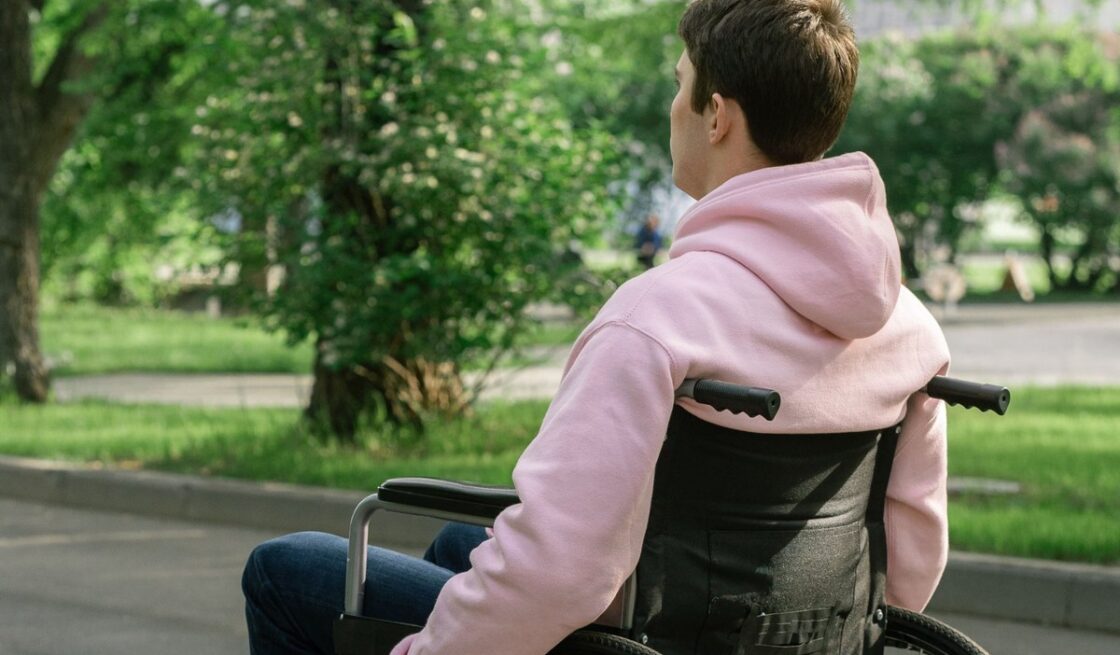
If you were paralyzed in a motorcycle crash that someone else caused, you can sue. Oklahoma law lets you hold the at-fault driver, business, or government agency responsible for the cost of your paralysis. That stays true even if you were partly at fault.
The harder question is who actually pays. A spinal cord injury can cost several million dollars over a lifetime, and the driver who hit you may carry only $25,000 in coverage. Most of the work in a paralysis case is finding more insurance, and that starts with finding everyone who shares the blame.
Who Can You Sue After a Motorcycle Crash Leaves You Paralyzed?
The driver is the obvious defendant. A common motorcycle crash is a driver turning left across a rider’s lane because they never looked for a bike, or looked and misjudged its speed. Drivers who drift into a rider’s lane, follow too close, or are on their phone are just as responsible. If the driver was drunk or distracted, that can also open the door to punitive damages.
But stopping at the driver is how families end up with a fraction of what the case is worth. These are the other places we look.
The driver’s employer
If the driver was on the clock, delivering packages, running a service call, or driving a company pickup, the employer can be held responsible too. Business auto policies are usually far larger than personal ones, which is why crashes with delivery drivers and work vehicles often have more insurance behind them.
A driver who never touched you
Plenty of riders go down without ever making contact. A car swerves into your lane, you lay the bike down to avoid it, and the car keeps going. That driver can still be liable. Our attorneys won exactly this point at the Oklahoma Supreme Court in Fargo v. Hays-Kuehn, 2015 OK 56, which held that a driver who wasn’t directly involved in a collision could be held responsible for it.
A bar or restaurant
If a drunk driver hit you, the bar or restaurant that kept serving them after they were visibly intoxicated may share the blame.
The city, county, or state
Potholes, loose gravel, broken pavement edges, and missing signs are far more dangerous on two wheels than four. Government agencies can be sued, but under different rules and a shorter deadline (more on that below).
The bike or parts maker, or the shop that worked on it
A brake failure, a tire that separated, or a bad repair can cause a crash with no other vehicle involved at all. Those product liability cases depend on keeping the motorcycle exactly as it was after the wreck. Don’t let the insurance company total it out and haul it away until a lawyer has had it inspected.
Will the Insurance Company Blame You for Riding?
Almost certainly. Adjusters know some jurors assume anyone on a motorcycle was speeding or showing off, and they lean on that assumption hard. Expect to hear that you were going too fast, that you were weaving, or that a driver couldn’t have seen you.
Oklahoma’s fault rule limits how much that can hurt you. Under 23 O.S. § 13, your own carelessness only bars recovery if it’s greater than the other side’s. Below that line, your award is reduced by your share of the fault. A rider found 20% at fault on a $3 million verdict still recovers $2.4 million.
That’s why the evidence gathered in the first few weeks matters so much. Skid marks get paved over, nearby businesses record over their camera footage, and the other driver’s story gets more polished every time they tell it.
What about lane splitting?
Oklahoma doesn’t allow motorcycles to ride between lanes of traffic, and if you were doing it when you crashed, expect the defense to make it the centerpiece of their case. It doesn’t automatically sink your claim, though. The question is still how much each person’s choices contributed to the wreck.
What if you weren’t wearing a helmet?
Oklahoma’s helmet law, 47 O.S. § 12-609, only applies to riders under 18. Adults can legally ride without one, and doing so doesn’t take away your right to sue the driver who caused the crash.
The defense will still bring it up. A Johns Hopkins study of more than 40,000 crashes found helmeted riders were 22% less likely to suffer a neck (cervical spine) injury, and defense lawyers know that research. Even so, a helmet only matters to the damages if it would have prevented or reduced this particular injury. A rider paralyzed by a mid-back fracture after being thrown into a guardrail is a very different case from one with a neck injury from a head-first impact. That’s a question for medical and crash experts, and we bring ours in early.
Where Does the Money Actually Come From?
Oklahoma only requires drivers to carry $25,000 in bodily injury coverage per person. The first year of care for someone with paraplegia averages $667,569, according to the National Spinal Cord Injury Research Center cited below. A minimum policy runs out before you leave inpatient rehab.
A strong verdict doesn’t change that math by itself. Most people who cause wrecks don’t have millions sitting in the bank. So in a paralysis case, a big part of our job is finding every policy that applies.
- The at-fault driver’s auto policy, plus any umbrella policy they carry
- The employer’s commercial policy, if the driver was working
- Policies covering any other responsible party, like a bar, a contractor, or a manufacturer
- Your own uninsured and underinsured motorist (UM/UIM) coverage
UM/UIM coverage pays when the at-fault driver has too little insurance or none, and depending on how your policies are written, more than one of them may apply. Our attorneys’ published win in Burch v. Allstate, 1998 OK 129, requires Oklahoma UM/UIM carriers to pay the full amount of a UIM claim from dollar one without deducting the potential recovery from the other driver’s insurance. This is a complicated area of the law that many personal injury attorneys are not well-versed in. Our attorneys were literally there when the law was made. Our experience in this area often means money in your pocket sooner while the fight with the other driver’s insurance company is ongoing.
Health insurance, Medicare, and SoonerCare will cover a lot of early treatment, but most will want to be paid back out of your settlement. Those liens can be negotiated down, and sometimes they don’t apply at all. In Moss v. Oklahoma Health Care Authority, our attorneys won a ruling that the state could only recover from a settlement that actually included payment for medical expenses.
What Can a Paralysis Lawsuit Pay For?
The National Spinal Cord Injury Statistical Center tracks what paralysis actually costs, and its figures are a starting point for nearly every serious spinal cord injury claim.
| Level of injury | First year | Each year after | Lifetime, if injured at 25 |
| High tetraplegia (C1 to C4) | $1,369,755 | $237,862 | $6,077,646 |
| Low tetraplegia (C5 to C8) | $989,768 | $145,918 | $4,440,708 |
| Paraplegia | $667,569 | $88,433 | $2,971,942 |
| Motor function at any level (AIS D) | $447,037 | $54,298 | $2,030,446 |
Figures in 2023 dollars from NSCISC 2024 Facts and Figures. They do not include lost wages.
Those figures are averages for medical and living expenses. Your claim is built around your own life, and it can include
- Hospital care, surgery, inpatient rehab, and years of therapy
- Attendant care, wheelchairs, medical supplies, and treatment for complications like pressure sores and infections
- Ramps, a renovated bathroom, a lift, and a vehicle with hand controls
- The paychecks you’ve already lost and the career you can’t go back to
- Pain, depression, and losing the things you loved, like riding, your work, or coaching your kid’s team
- Your spouse’s own claim for what the injury has taken from your marriage
For injuries on or after September 1, 2025, Oklahoma limits pain and suffering damages to $500,000 in most injury cases (23 O.S. § 61.3). That limit does not apply when the injury is permanent and severe, such as the loss of use of a limb, which describes most paralysis cases. It also lifts when a judge and jury find by clear and convincing evidence that the at-fault party acted recklessly or with gross negligence. Medical costs and lost income are never capped.
How Long Do You Have to File?
In most Oklahoma injury cases, two years from the date of the crash (12 O.S. § 95). Don’t wait on it. The investigation has to happen in the first few months, long before anything gets filed.
If a city, county, or state agency had any role in the crash, the clock is much shorter. You have to give the government written notice of your claim within one year (51 O.S. § 156), and the Governmental Tort Claims Act puts limits on what you can recover. In Tatum & Underwood v. City of Oklahoma City, our attorneys represented two motorcyclists hurt on city land, beat the City’s claim that it was immune, and won a jury verdict.
Why You Shouldn’t Settle a Paralysis Claim Early
The at-fault driver’s insurer may offer to pay its policy limit quickly, sometimes within weeks. When the bills are stacking up, that offer can feel like relief. Before you sign, know that a settlement release is almost always final. Once it’s signed, you generally can’t come back for more, even if your needs turn out to be far greater.
Early on, nobody knows yet what your life will look like in five or twenty years, including your doctors. How much function returns, which complications show up, and what care you’ll need as you age all shape the value of the case. We bring in a life care planner who works with your physicians to map out that future, item by item, and an economist who puts a present-day dollar figure on it. That plan is what we put in front of the insurance company and, if needed, a jury.
If you’ve already received an offer, learn how to respond to a lowball settlement offer before you answer it. A few other things protect the claim while the work happens.
- Don’t give a recorded statement to the other driver’s insurer.
- Keep the motorcycle, helmet, jacket, and boots exactly as they are.
- Save every bill, receipt, and mileage log for medical trips.
- Stay off social media, or at least stop posting about the crash and your recovery.
Common Questions
How much is a motorcycle paralysis case worth in Oklahoma?
There’s no honest average, because the value depends on the level of injury, your age and work, how clear the fault is, and how much insurance can be found. Estimated lifetime care costs alone range from about $1.4 million to over $6 million depending on the injury and the rider’s age, before lost income or pain and suffering.
I was the passenger. Can I sue?
Yes, and passengers are often in a stronger position because they had no control over the bike. A passenger may be able to claim against the other driver, the motorcycle operator’s insurance, or both.
What if the crash also caused a brain injury?
That’s common in serious motorcycle wrecks, and it changes both the medical picture and the value of the case.
Can the family file a claim if a paralyzed rider later passes away?
If the death is connected to injuries from the crash, the family may have a wrongful death claim. Oklahoma’s constitution doesn’t allow damage caps in wrongful death cases.
Talk to a 2|22 Motorcycle Accident Lawyer
2|22 Injury Lawyers is a family-run firm with offices in Tulsa, Oklahoma City, and Grove. Our attorneys, Tye Smith, Sheldon Smith, Bailey Smith Londagin, and Christopher Stevens, have recovered more than $80 million in verdicts and settlements for injured Oklahomans, including several of the published decisions mentioned above.
Insurance companies keep track of which lawyers actually go to trial, and they price their offers accordingly. We prepare paralysis cases for a jury from the start, because that’s what moves an insurer toward a fair number.
If you were paralyzed in a crash, our Tulsa and Oklahoma City motorcycle accident lawyers can look at who else shares the blame and every policy that might pay.
The consultation is free, and we don’t get paid until you do. Call or send us a message.

Oklahoma City Office
2|22 Injury Lawyers™, PLLC
7301 Broadway Ext Suite 222
Oklahoma City, OK 73116
Request a Free Consultation
We Don’t Get Paid Until You Do
Fields Marked With An * Are Required

Tulsa Office
2|22 Injury Lawyers™, PLLC
1217 E 33rd St.
Tulsa, OK 74105
*Please send all mail correspondence to this location
visit us
Oklahoma City Office
2|22 Injury Lawyers™, PLLC
7301 Broadway Ext Suite 222
Oklahoma City, OK 73116
visit us
Tulsa Address
2|22 Injury Lawyers™, PLLC
1217 E 33rd St.,
Tulsa, OK 74105
*Please send all mail correspondence to this location
call us
toll free 918-528-0222
© Copyright 2026 2|22 Injury Lawyers™. All rights reserved.